Change energy, change lives
The right breakthroughs can shift entire energy systems. These Stories of Impact explore how Global Energy Alliance partners with countries to power that change for people and planet.

How we drive systems change

Impact doesn't end when a community is connected to electricity, or a new battery storage system goes live.

It happens when we work with countries to change the policies, markets and institutions that hold clean energy back, creating the conditions for lasting change at scale.

Global Energy Alliance harnesses catalytic capital, technical expertise and deep partnerships to remove barriers, reshape incentives and strengthen institutions so progress continues long after our engagement ends.

Global Energy Alliance delivery model: public private philanthropic partnerships, catalytic finance and technical expertise support two global pillars, Grids of the Future and Powering Opportunity, which together drive a cycle of increased productivity and increased demand

We work on both sides of the energy system. Grids of the Future supports the modern, flexible power systems needed to deliver abundant clean energy. Powering Opportunity helps turn that energy into jobs, enterprise and better lives.

This is how energy infrastructure becomes economically viable, markets become self-sustaining, and a pipeline of projects extends across a country, with lessons shared across the world.

Grids of the Future

Market shaping: Reliable power for a modern economy

India's first, commercial standalone, utility-scale battery energy storage system (BESS) at Kilokari in Delhi, the first of its kind in South Asia, paved the way for more modern grids across emerging economies.

By overcoming technological and regulatory hurdles, including setting a tariff nearly 50 percent below previous benchmarks, Kilokari delivered a revenue model and a detailed implementation blueprint at a critical moment in India's clean energy trajectory. As battery prices were falling sharply, it helped unlock a pipeline of 55GW in utility-scale BESS, promising more reliable, more affordable and cleaner energy for millions of people. Knowledge exchanges in both Africa and Latin America and the Caribbean are ensuring lessons from India reach emerging and developing economies across the world. Partly informed by learnings from India, Malawi's first grid-connected BESS, a breakthrough for BESS in Africa, went online in July 2026.
$5-6 billion anticipated public and private investment in India's BESS pipeline
55GW pipeline of utility scale BESS across India
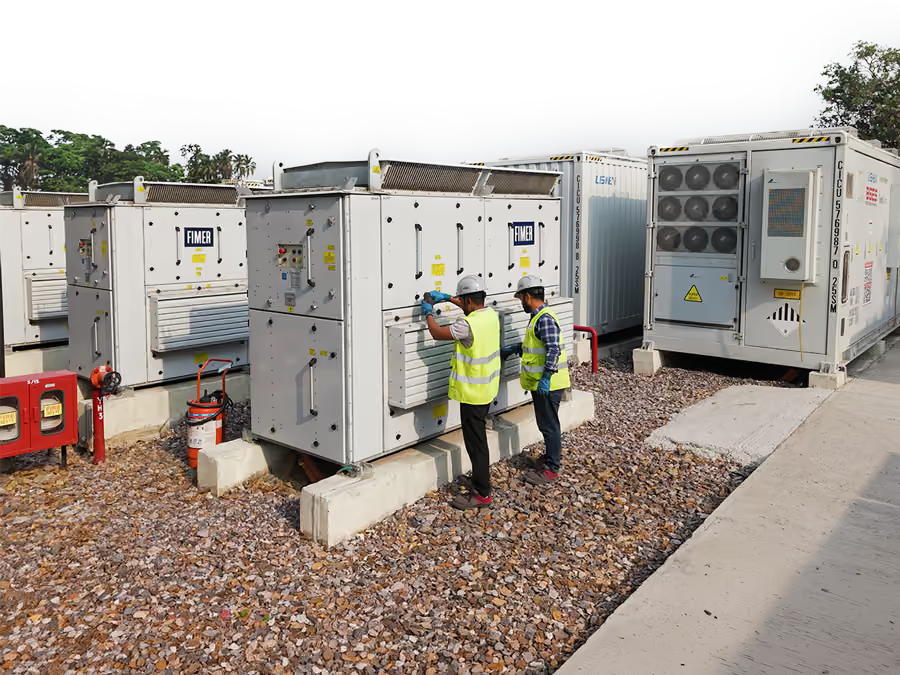
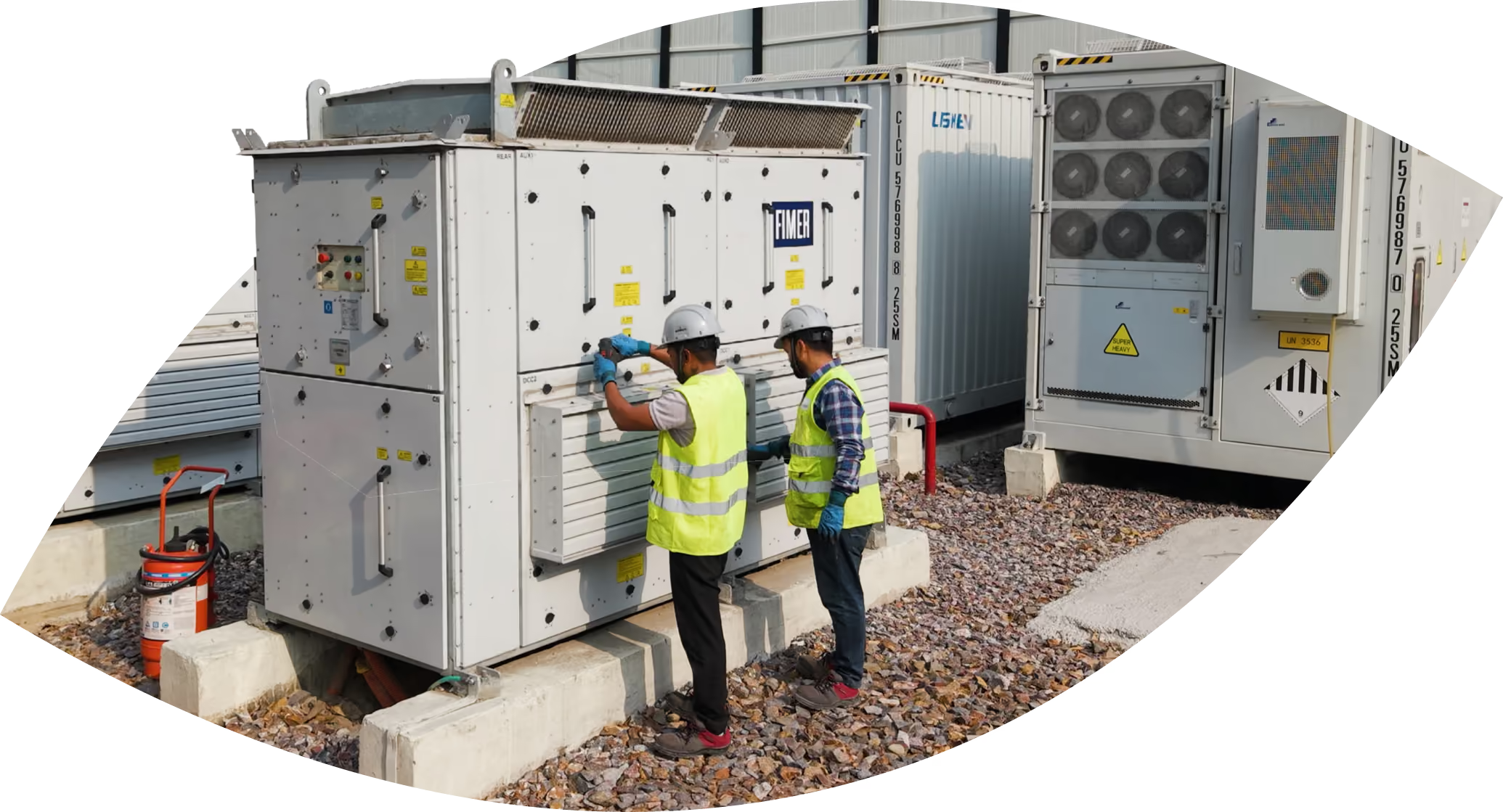
Workers in hi-vis vests and hard hats at an inverter cabinet on the Kilokari battery energy storage site, New Delhi
Kilokari,
India
[The Kilokari] project is a strong signal to policymakers and investors alike that battery storage is not just a future solution, it is an urgent priority and compelling opportunity today.”
– Francesco La Camera, Director-General of the International Renewable Energy Agency (IRENA)
Lilongwe,
Malawi
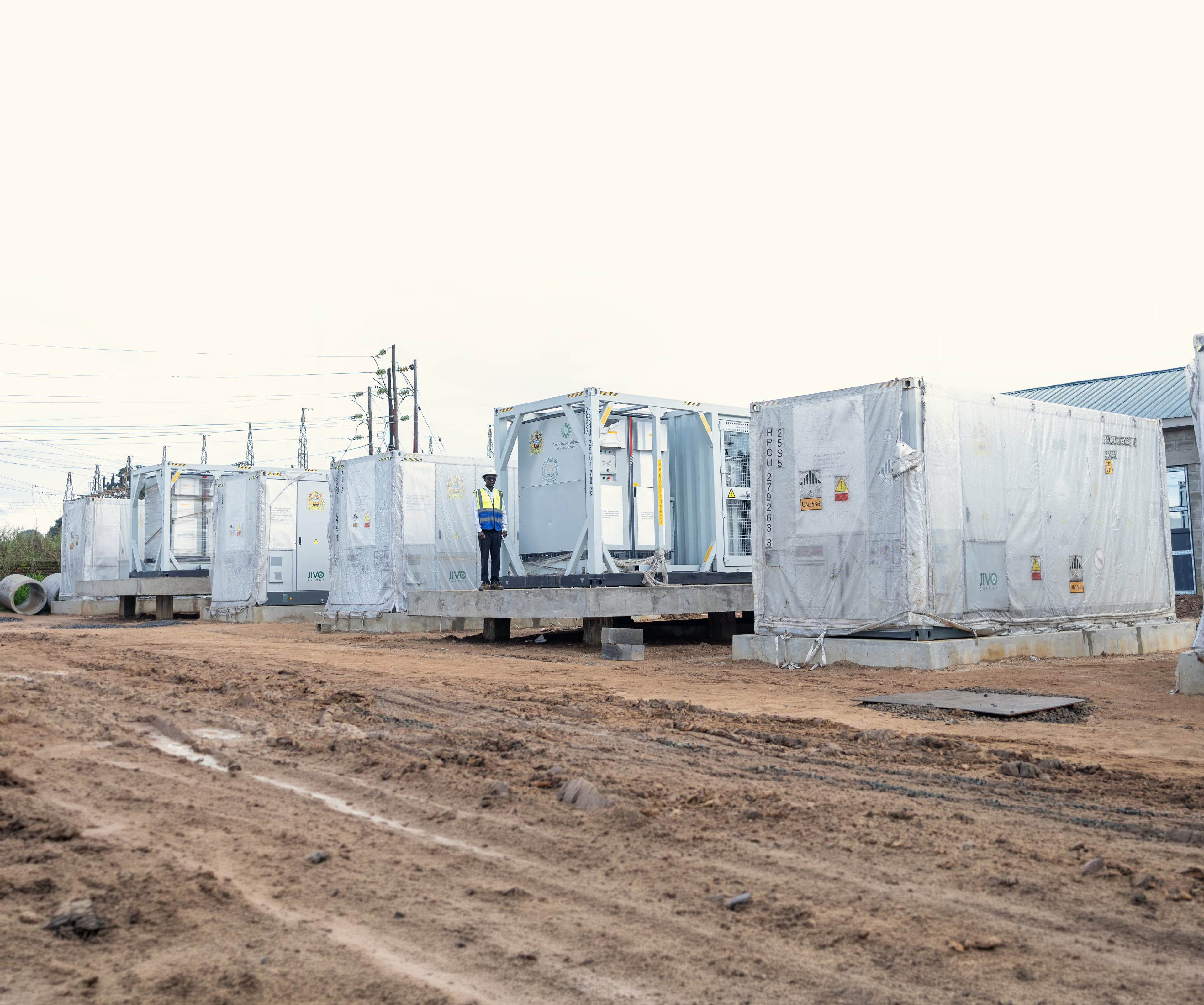
Rows of battery containers awaiting installation at the Lilongwe battery energy storage site in Malawi

Learn more about our work supporting battery storage in India and across the world

Grids of the Future
Powering Opportunity

Policy innovation: Transforming Nigeria’s energy system
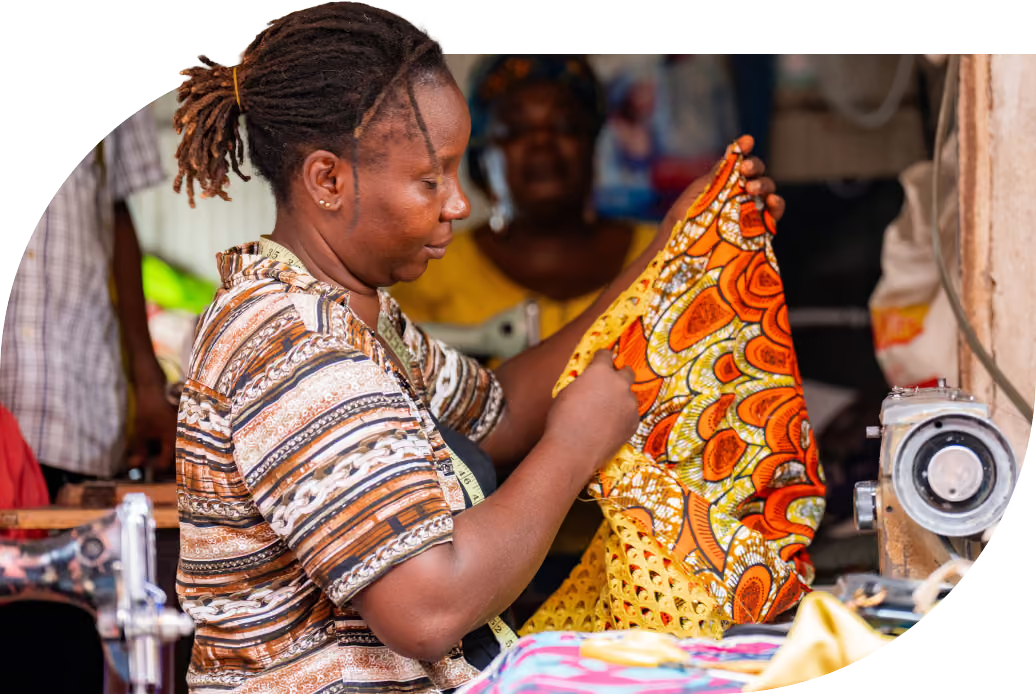
Our interconnected mini grid pilots convinced Nigeria's regulator to require every distribution company to source 10 percent of its power from local generation, with half coming from renewables. Interconnected mini grids are now integrated into Nigeria’s national electrification strategy.
Seamstress Mary Alaele Baelanki holds up patterned fabric at her stall in Wuse Market, Abuja, which received mini grid electricity in 2024
Seamstress Mary Alaele Baelanki at her stall in Wuse Market, Abuja. The market received mini grid electricity in 2024
Watch video
The interconnected mini grid … is the perfect solution for underserved areas and commercial hubs”
– Chris Nwachukwu, GVE Projects

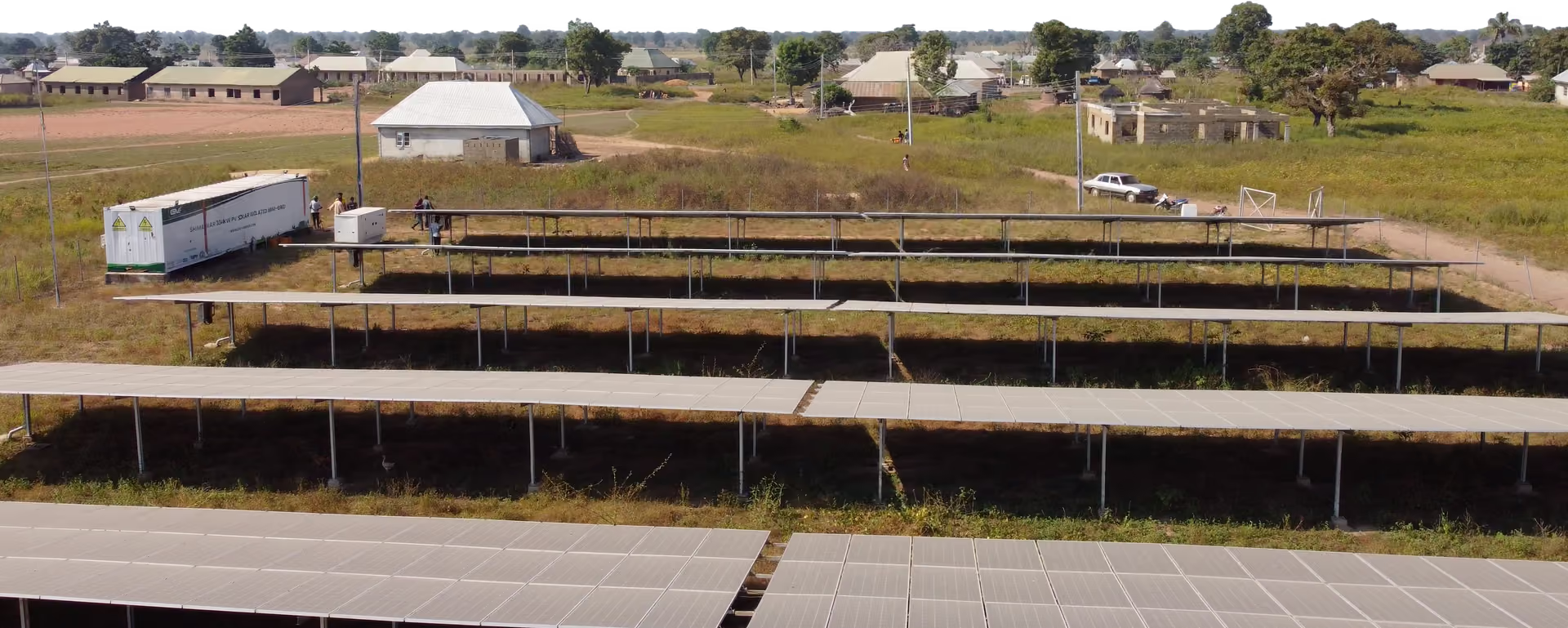
In a country where one-in-three people lack electricity, we partnered with the government, distribution companies, regulators and RMI to pilot interconnected mini grids to strengthen the grid. The regulator raised the size limit per site tenfold, to 10MW and the World Bank committed $127 million to scale the model. More than 100 projects are in the pipeline and set to deliver reliable, clean energy to tens of thousands more homes and businesses.The market is now moving on its own: a distribution company with no part in the pilots has opened 9.5MW of its franchise area to developers.
$287 million in financing unlocked
10% Nigeria now requires utilities to source 10 percent of energy from local generation
A solar mini grid providing clean, reliable energy for the Shimankar community in Nigeria

Read more about how mini grids and agricultural equipment improve incomes and lives

Download Case Study
Shimankar,
Nigeria
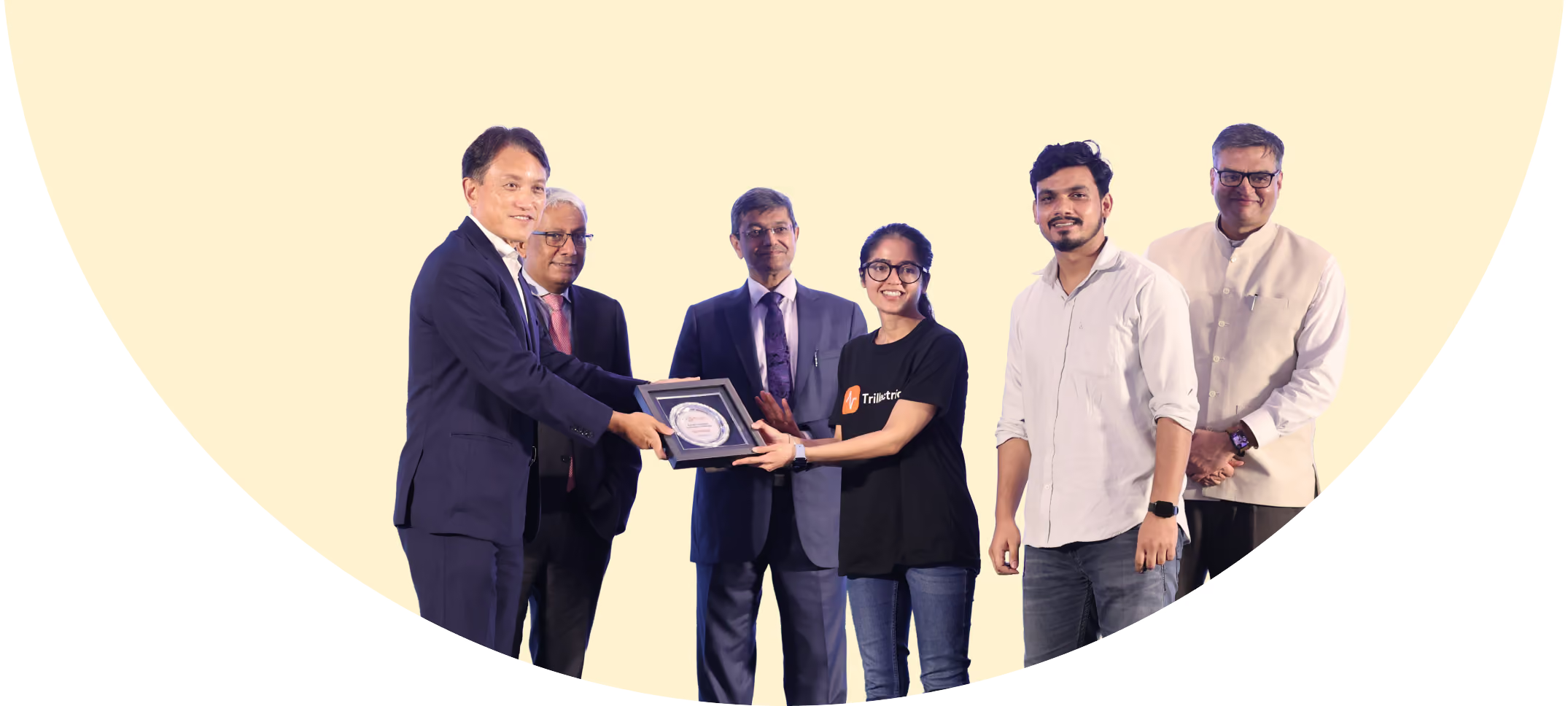
Electric mobility company Trilectric receive their ENTICE 2.0 award from Global Energy Alliance CEO Woochong Um
Engaging directly with utilities to showcase how our solutions can help them meet their goals – that was a game changer for us.”
– Arshi Chaddha, co-founder Trillectric, ENTICE winner, 2025
Grids of the Future

Opening India's utilities to clean tech innovators

An innovation incubator headquartered in India, ENTICE gives India's regulated utilities a low-risk route to adopt new technologies.

The program backs credible early stage clean-tech startups. Utilities set the problem, startups pilot solutions, and the evidence helps utilities justify the adoption to regulators.

Now in its third year, the program has partnered with leading public utilities, engaged more than 600 startups, and unlocked $5 million in equity investments to accelerate India's climate and clean energy ambitions.

$5 million
Equity investments unlocked
600+
innovators engaged
Engaging directly with utilities to showcase how our solutions can help them meet their goals – that was a game changer for us.”
– Arshi Chaddha, co-founder Trillectric, ENTICE winner, 2025

Learn more about our work driving innovation in India

Download Case Study

After winning ENTICE in 2023, the energy storage start-up AmpereHour partnered with the power utility BSES Rajdhani Power Limited to deploy one of India's first commercially approved, utility-scale battery storage systems in New Delhi.

Aerial view of the Kilokari battery energy storage site in New Delhi, India
Grids of the Future
Powering Opportunity

Proving innovative tech in Haiti

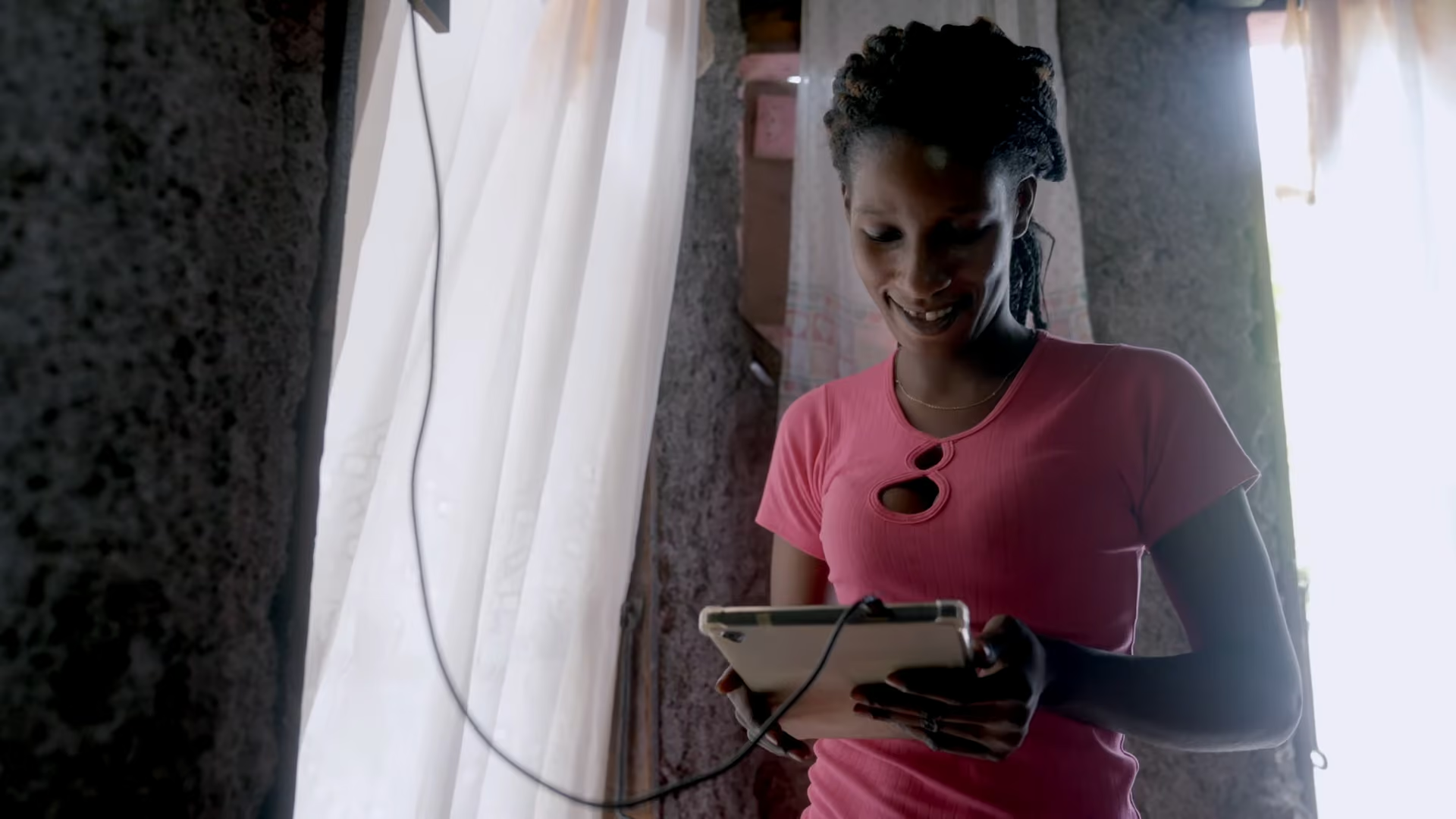
We saw the need for targeted business support and regulatory change to stimulate a promising but stalled market for solar mesh grids, creating a model for electrifying hard-to-reach rural areas worldwide.

Our technical experts worked alongside the government to build a regulatory foundation for off-grid solar systems, signaling to investors that the market opportunity was there. We brought concessional financing and business development skills to support the private sector. Today, 25,000 remote households in Haiti are on track to receive electricity. Mesh grids are now an integral part of Haiti’s national electrification plan and a blueprint for electrifying remote and rural communities across the world, including World Bank funding for mesh grids in Nigeria.
Watch video
Mesh grids provide a way for communities – specifically sparse communities – to access affordable and reliable energy”
– Euromina Thevenin, Okra Solar
By 2050 Mesh grids now part of Haiti’s Horizon 2050 electrification plan
25,000+ households on track to receive electricity

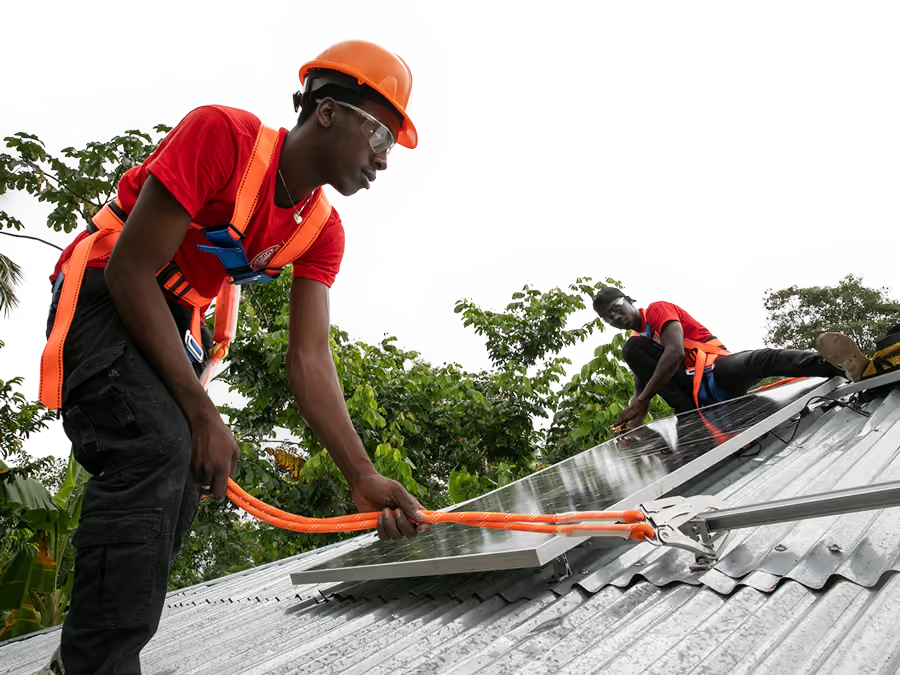
In rural Haiti, rooftop solar systems are connected together in mesh grids – a fast-to-deploy, resilient solution to bring electricity to remote, off-grid communities.
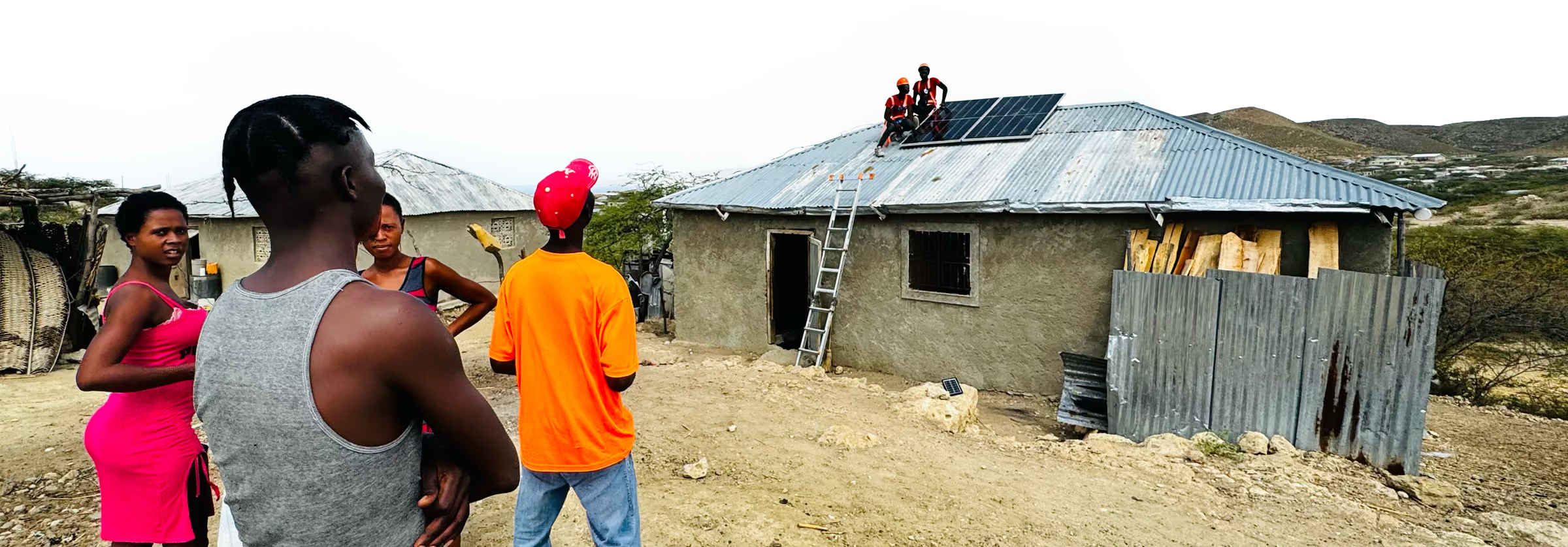
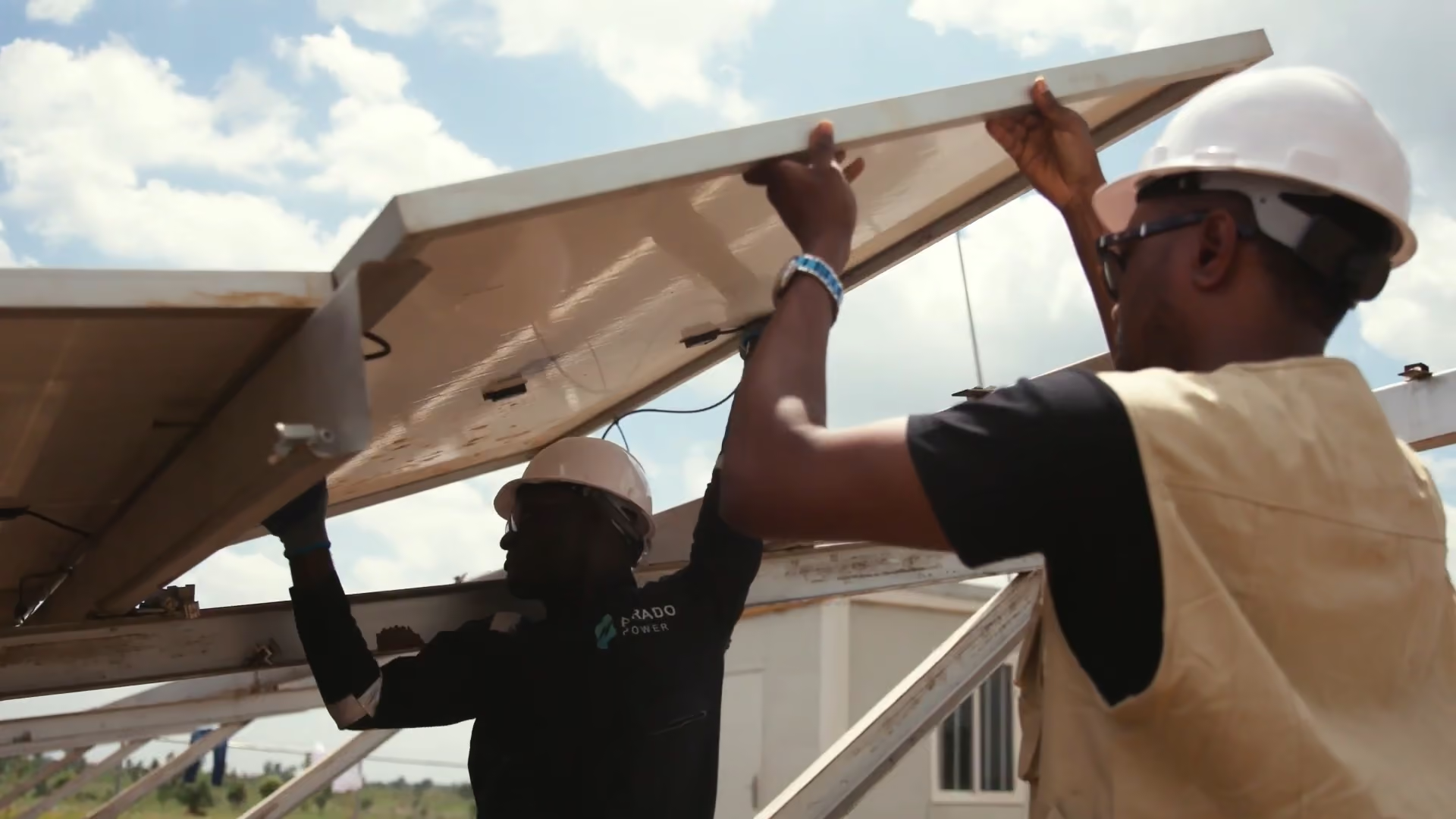
Residents watch as installers fit solar panels to the roof of a house in rural Haiti

Read more about how mesh grids accelerate reliable energy access

Download Case Study

In rural Haiti, rooftop solar systems are connected together in mesh grids – a fast-to-deploy, resilient solution to bring electricity to remote, off-grid communities.

Grids of the Future
Powering Opportunity

The power of energy for better farming
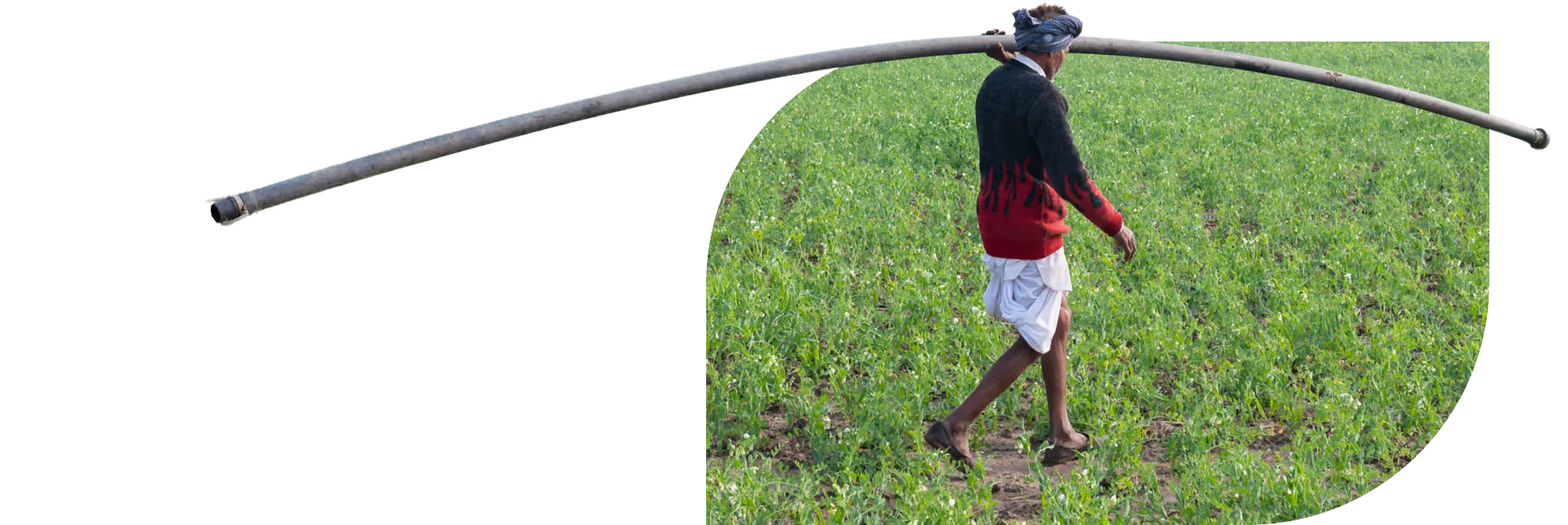
In Rajasthan, India, we applied bespoke digital tools to unlock bottlenecks in the government's distributed renewable energy program and create a replicable model of public-private collaboration.
A farmer carries a long irrigation pipe across his shoulders over a green field in Rajasthan, India
We visited more than 1,000 farmers across 50 communities to increase awareness of the agri-solarization program
Watch video
All our electricity-related problems have been resolved. Farming has improved, children no longer face challenges while studying”
– Anna Yadav, teacher

Our farmer outreach program and digital land-registration tool enabled farmers to bundle contiguous plots of land into sites large enough to attract solar development. More than 530,000 new solar irrigation pumps have been deployed and more than a million farmers now have access to clean energy. Nine additional states are now set to accelerate agri-solarization and a similar program is under design in Nigeria.
$1.2 billion in financing unlocked
12 million+ farmers by 2030
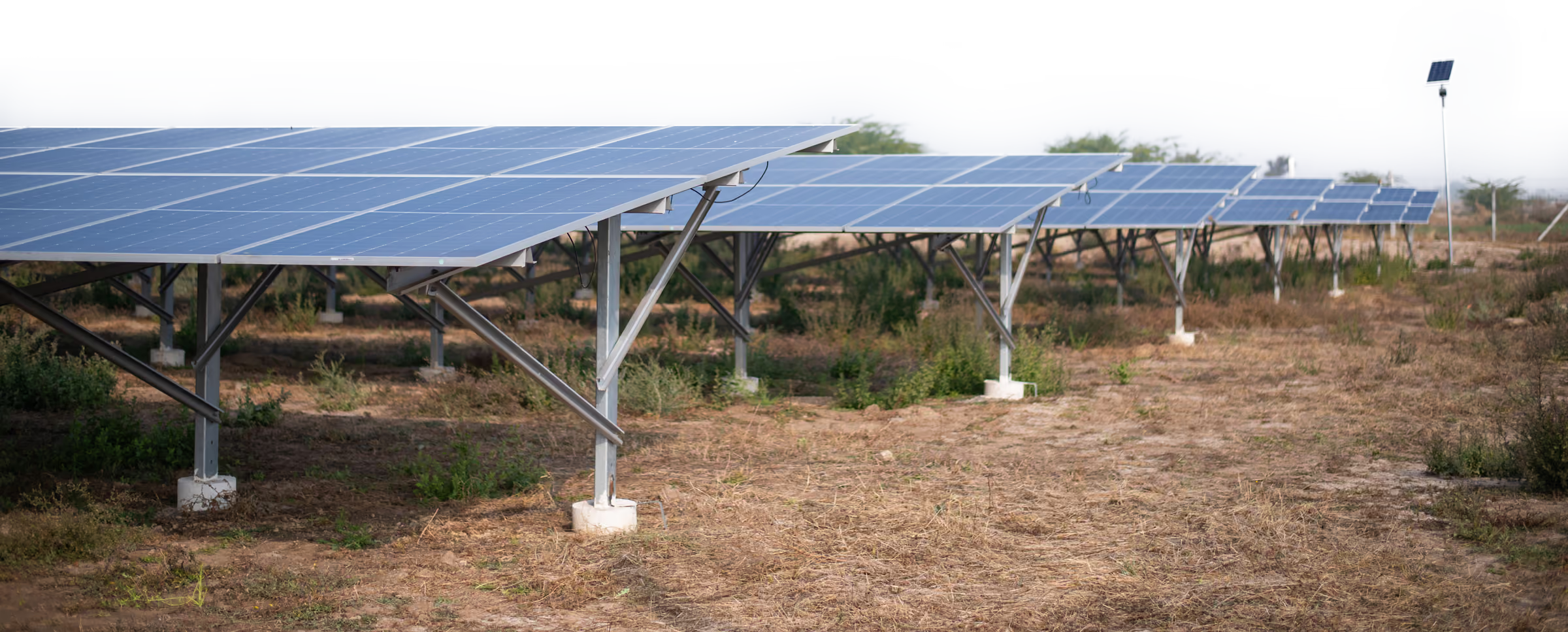
Rows of ground-mounted solar panels on dry farmland in Rajasthan, India

Read more about how transforming energy transforms agricultural livelihoods

Download Case Study
Rajasthan,
India
Powering Opportunity

The tools that drive Africa’s economy

Our innovative financing tool shaped the market conditions to increase access to solar-powered tools and equipment, improving prospects for small businesses across six African countries.

Our results-based Productive Use Financing Facility (PUFF) supported manufacturers and distributors of productive equipment including water pumps and cold storage units by lowering costs and increasing demand. More than 16,000 pieces of equipment have been distributed to date. The program unlocked 13X in follow-on capital. PUFF 2.0 is now under way in Ethiopia, Kenya and Nigeria. Expansion beyond Africa is planned.

16,000+
appliances distributed to date
$83.5 million
in financing unlocked
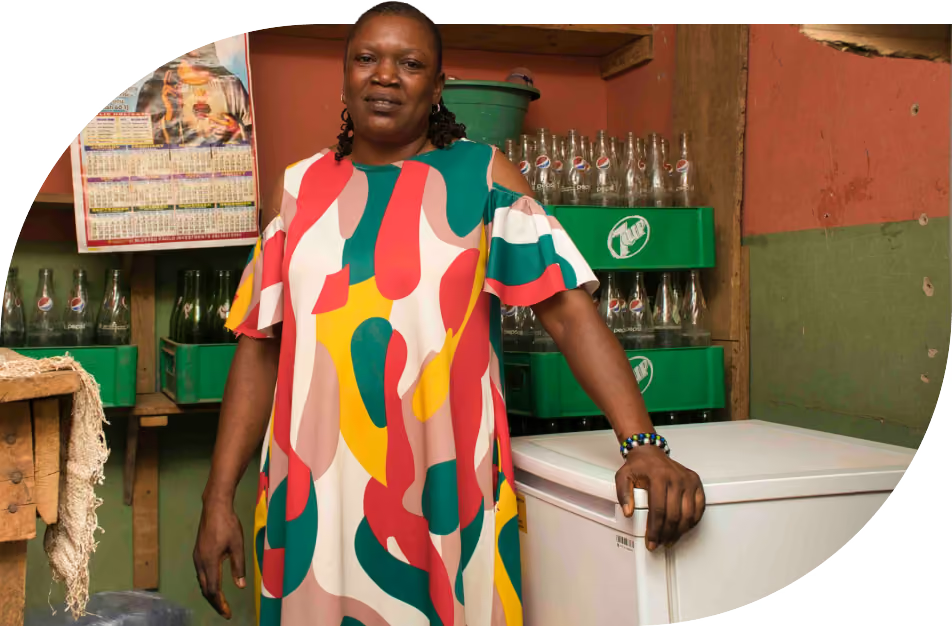
Helen Obina stands beside the solar-powered refrigerator in her shop in Nigeria
In Nigeria, Helen Obina is using a solar refrigerator from Consistent Energy. Photo: CLASP
The support offered under PUFF has … allowed us to refine our pricing model and make cold storage available to rural farmers at rates they can afford”
– Dennis Karema, SokoFresh, Kenya
Doris Chuwa smiles behind the counter of her bar in Nigeria, where a solar-powered chiller keeps drinks cold
Doris Chuwa sells cold drinks thanks to a new chiller from Kooboks. Photo: CLASP
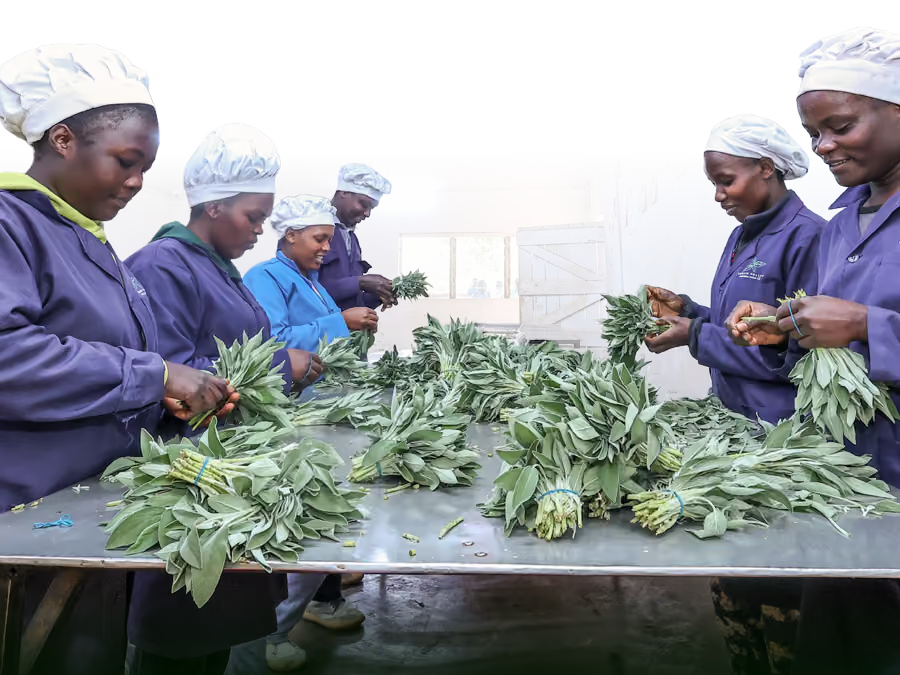
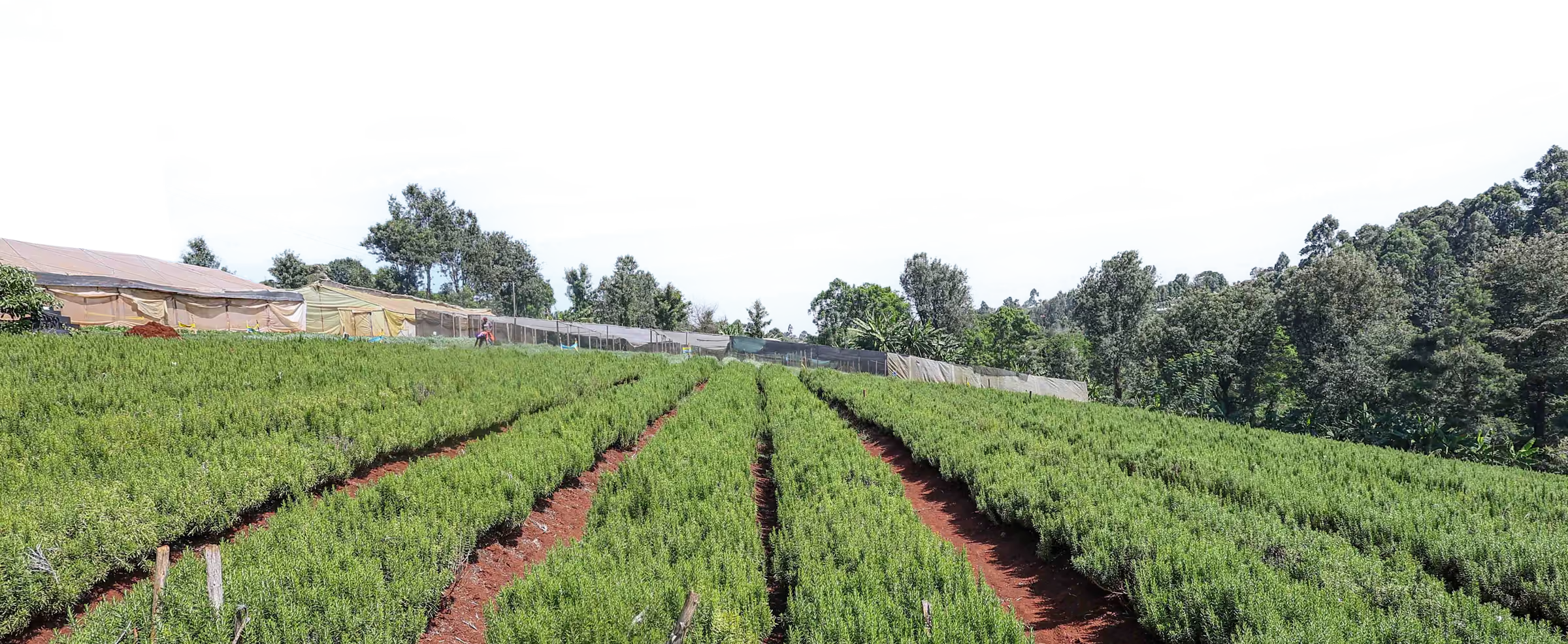
Rows of herbs growing in the fields at Urban Valley Natural Farms in Kenya

Read more about how solar-powered tools make renewable energy work for people

Download Case Study
Urban Valley Natural Farms,
Kenya
Back to top